
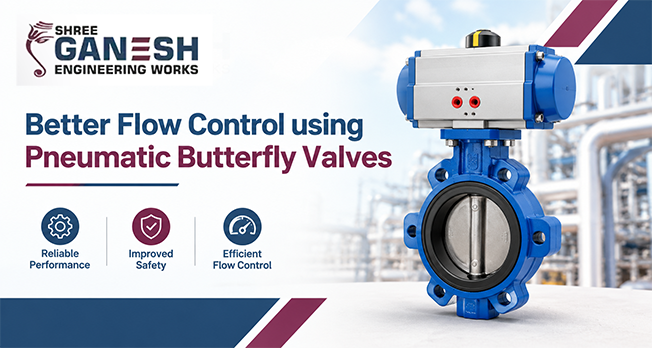
Valves are needed in many plants to be operated fast and automatically without the necessity of manual intervention each time. Such a practice turns out to be very convenient when valves are installed in long pipes or in places which cannot be reached easily.
A pneumatic actuator uses compressed air to operate the valve, making the overall process faster and easier. When a pneumatic actuator and butterfly valve are combined, they provide a compact solution for flow control. For industries looking for this type of solution, choosing a reliable pneumatic actuator butterfly valve manufacturer can help them find a valve that suits their application.
More Convenient Means of Operating a Butterfly Valve
A butterfly valve works through rotating a disk located in the pipe line. Manual operation is achieved by manually operating the valve. Pneumatic actuator uses compressed air to operate the valve.
This becomes significant in industries where the valve is to be operated repeatedly within the course of the day. The valve will no longer rely on manual operation but operates through the pneumatic process.
Quarter turning of the butterfly valve makes it possible to move from the open to the closed position and vice versa without any complications in the process.
What Makes Pneumatic Operation Useful?
The biggest advantage is convenience. Once connected to the appropriate control arrangement, a pneumatic valve can be operated without an operator standing directly beside it.
It can also be useful where quick valve movement is needed. For example, when a section of a process line needs to be isolated, faster operation can help make the overall process more convenient.
Pneumatic systems can also work well in industrial environments where compressed air is already available. This means the actuator can be integrated into an existing plant setup without requiring a completely different operating method.
Understanding How to Match the Valve and Actuator
A pneumatic actuator should not be selected simply because it fits the valve. It must provide enough torque to operate the valve properly and consistently during regular use.
The choice of actuator can depend on factors such as operating pressure, valve size, sealing arrangement, process fluid, and available air pressure. Ignoring these points may affect the way the valve operates and can lead to performance issues.
That is why the application requirements should be understood before purchasing the equipment. A reliable pneumatic actuator butterfly valve manufacturer can help buyers select a suitable combination of valve and actuator based on their specific requirements.
Applications across Industrial Piping
Pneumatic actuator butterfly valves can be used in many systems where automated on-off flow control is required.
Common applications include:
- Water and wastewater treatment
- Chemical processing
- HVAC systems
- Power plants
- Oil and gas facilities
- General industrial process lines
The true suitability is based on the nature of the process and the environment in which the valve operates. For instance, a valve operating under water service may have different needs from one operating in a chemical process.
Simple Maintenance Can Prevent Bigger Problems
Any mechanical equipment requires proper care. Maintenance doesn't have to be necessarily difficult. Simple inspection can help discover minor faults before they impact the process.
The supply of the air must be inspected to ensure that the actuator gets sufficient pressure. Inspections of the connections and air lines can also reveal any leaks.
While conducting plant maintenance, the valve and actuator can be monitored for any noise or any difference in movement or operation. If there is anything abnormal, then it might be good to check it out.
Selecting a Manufacturer You Can Rely On
The quality of the valve is only one part of a successful installation. The manufacturer's understanding of the application also matters.
Shree Ganesh Valve produces pneumatic actuator butterfly valves for industrial flow control applications. These include applications in water treatment, chemical processing, oil & gas industry, power plants, HVAC, and other industrial applications.
It is important that before purchasing the valve, the buyer informs about the location of installation and the service of the valve. In this way, the manufacturer can advise on the right configuration of the valve based on the application.
Frequently Asked Questions (FAQs)
1. How is a pneumatic actuator used to open and close a butterfly valve?
The use of compressed air in the actuator helps generate the motion required to rotate the disc of the butterfly valve from one point to another.
2. Can a pneumatic butterfly valve be remote controlled?
Yes, this valve can be controlled via remote control if a corresponding system is applied.
3. Is compressed air essential for a pneumatic actuator operation?
Yes, this actuator requires an adequate air compression source.
4. In which spheres are pneumatic actuator butterfly valves widely used?
They are widely used in water treatment facilities, in chemical industry, in HVAC, power generation, oil and gas industries, and in others.
Conclusion
Industrial pneumatic actuator butterfly valves provide an easy means of controlling industrial flow-control valves without depending solely on manual labour. The rapid quarter-turn operation coupled with ease of integration with automatic systems makes it possible to use such valves in various applications.
What matters most is the selection of appropriate valve and actuator combinations for your specific process. Appropriate selection together with simple maintenance procedures will assist in keeping the whole system running efficiently.
For industrial firms that desire automatic solutions for their flow control valves, working with an experienced pneumatic actuator butterfly valve manufacturer may make the process much easier.
