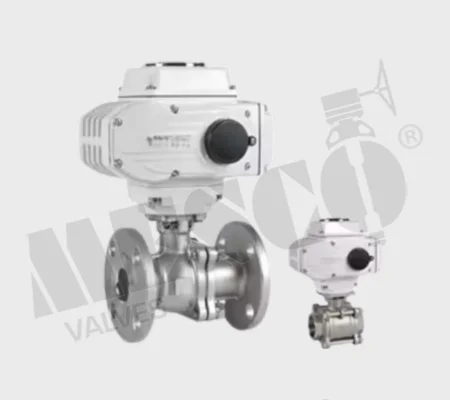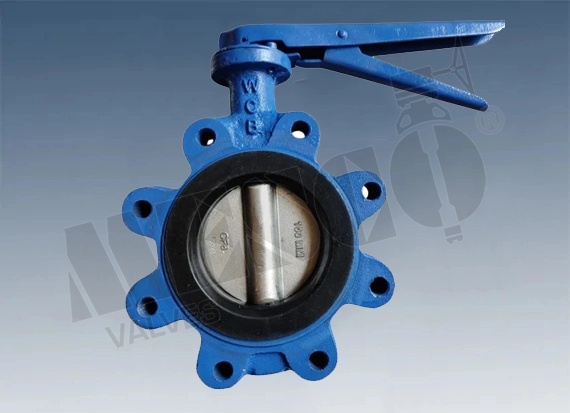
Shree Ganesh Valve, a trusted name of Shree Ganesh Engineering Works, manufactures and supplies high-quality lug type motorized butterfly valves for reliable and automated flow control. These valves combine the compact and strong construction of a lug type butterfly valve with an electric actuator, allowing pipelines to be operated remotely and efficiently.
Our lug type motorized butterfly valves are optimized for use in situations where frequent operation, precise flow isolation and automated control are necessary. They can be used in water treatment, chemical processing, power plants, HVAC systems, oil and gas industry, industrial power, and other process industry applications. The valve can be customized based on the operating needs using the appropriate material, size, pressure range, and actuator type.
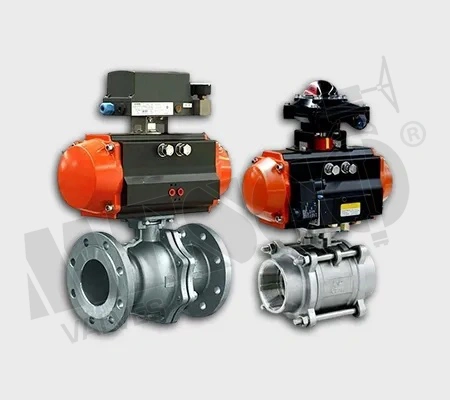
A motorized flanged butterfly valve is a butterfly valve that is equipped with an electric actuator and has flanged end connections. A quarter turn mechanism on the actuator opens and closes the pipeline by rotating the valve disc.
The electric actuator gives the ability to drive the valve remotely or automatically with appropriate electrical controls, PLC systems and industrial automation equipment. This valve can be used in a wide range of industrial pipelines and is designed to ensure secure connection between the mating pipeline flanges through a flanged connection.
| Parameter | Details |
|---|---|
| Valve type | Lug type motorized butterfly valve |
| Size range | DN 40 to DN 600 (1.5" to 24") |
| Pressure rating | PN 10 / PN 16 / Class 150 |
| Body material | Cast iron, ductile iron, carbon steel (WCB), stainless steel (CF8 / CF8M) |
| Disc material | CI, SS 304, SS 316, aluminium bronze |
| Seat material | EPDM, NBR, Viton, PTFE |
| Actuator | Electric (on/off or modulating) |
| Power supply | 24V DC, 110V AC, 220V AC single phase, 380/415V AC three phase |
| End connection | Lug type, wafer drilled as per ANSI, DIN, BS, JIS |
| Design standard | API 609, BS 5155 |
| Operation | Electric with manual override |
| Temperature range | -10°C to 180°C (depends on seat) |
A lug type motorized butterfly valve is a lug-style butterfly valve operated by an electric actuator. It is used for automated opening, closing, isolation, and suitable flow-control applications.
A motorized butterfly valve allows automated or remote operation. It is useful where frequent manual operation is difficult or where the valve needs to be controlled through an automation system.
They are commonly used in water treatment, chemical processing, power generation, HVAC, industrial utilities, oil and gas, and other process applications.
Yes. With a compatible electric actuator and control arrangement, the valve can be integrated with a PLC or other industrial automation system.
Valve selection depends on factors such as pipeline size, pressure, temperature, fluid characteristics, required body and seat materials, operating frequency, and actuator requirements.